Back to Projects
Back to Projects
Building UX from scratch in a startup that didn't know who it was selling to
Building UX from scratch in a startup that didn't know who it was selling to
Year
Year
November 2023 - January 2024
November 2023 - January 2024
Company
Company
Dynamo Mobile
Dynamo Mobile
Location
Location
Argentina
Argentina
Role
Role
Senior UX Designer · UX Lead
Solo UX hire — end-to-end ownership of the experience area
Discovery & research
Content strategy
UX/UI desginer
Product design
Information architecture
Resume
Resume
I joined to unblock an MVP stalled for 6 months. My scope: build the UX area from zero, train the team, and help the product find its market.
I joined to unblock an MVP stalled for 6 months. My scope: build the UX area from zero, train the team, and help the product find its market.
The challenge
The challenge
Sole UX hire. I worked directly with the PM, PO, and CTO — responsible for everything from team training to handoff infrastructure to interface iteration.
Sole UX hire. I worked directly with the PM, PO, and CTO — responsible for everything from team training to handoff infrastructure to interface iteration.
Sole UX hire. I worked directly with the PM, PO, and CTO —responsible for everything from team training to handoff infrastructure to interface iteration.
When I joined, the team had been building the MVP for over 6 months. The product was technically solid, but commercially stuck: no defined ICP, no UX layer, and a feature set copied from competitors with no validation from real users. Sales couldn't close demos because the platform didn't clearly solve any specific pain better than the alternatives already on the market.
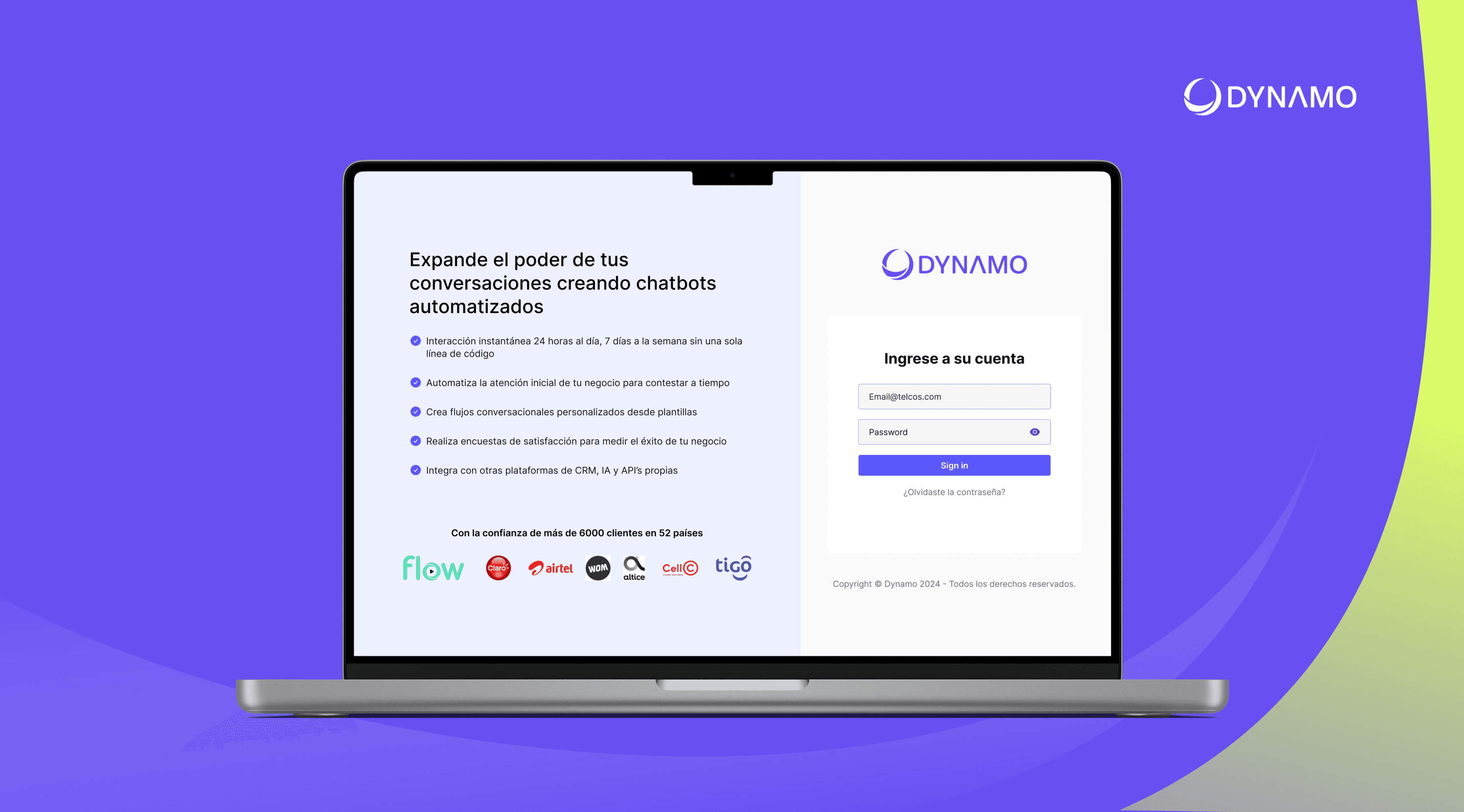
The first thing is that the company Dynamo Mobile is a startup that had been developing an MVP for at least 6 months that would allow them to address a new business unit in the future.
When I joined, the team had been building the MVP for over 6 months. The product was technically solid, but commercially stuck: no defined ICP, no UX layer, and a feature set copied from competitors with no validation from real users.
Sales couldn't close demos because the platform didn't clearly solve any specific pain better than the alternatives already on the market.
There was no UX area. There was no documentation. There was no handoff process. That was my starting point.
There was no UX area. There was no documentation. There was no handoff process. That was my starting point.
My role and scope
My role and scope
I was brought in as the sole UX hire, reporting into a team of PM, PO, and CTO.
My responsibility wasn't limited to designing screens — it was to build the conditions
for user-centered thinking to exist in the company at all.
The second thing was that the project had a development and performance based work perspective, but did not have end-user centric thinking, as it did not have a clear horizon.
It was not determined within their MVP who they were selling the platform to, they just copied different functionalities from various competitions.
This caused a difficulty in the sale because their proposal was not superior for the launch, they had the same functionalities as the rest, even without considering some integrations that were already on the agenda such as AI.
That meant three parallel tracks from day one:
→ Train the team on UX fundamentals, heuristics, and design-dev collaboration
→ Establish the first documentation and handoff infrastructure
→ Start iterating the product based on heuristic findings, not assumptions
Finally, the third thing was the lack of a UX area whose priority was to collaborate in the improvement that could give sales a differential over the competition.
This made my participation essential during the first months, since my personal objective was to train the whole team on the discipline, processes, best practices and hand-offs.
Before touching the interface, I trained the team
Before touching the interface, I trained the team
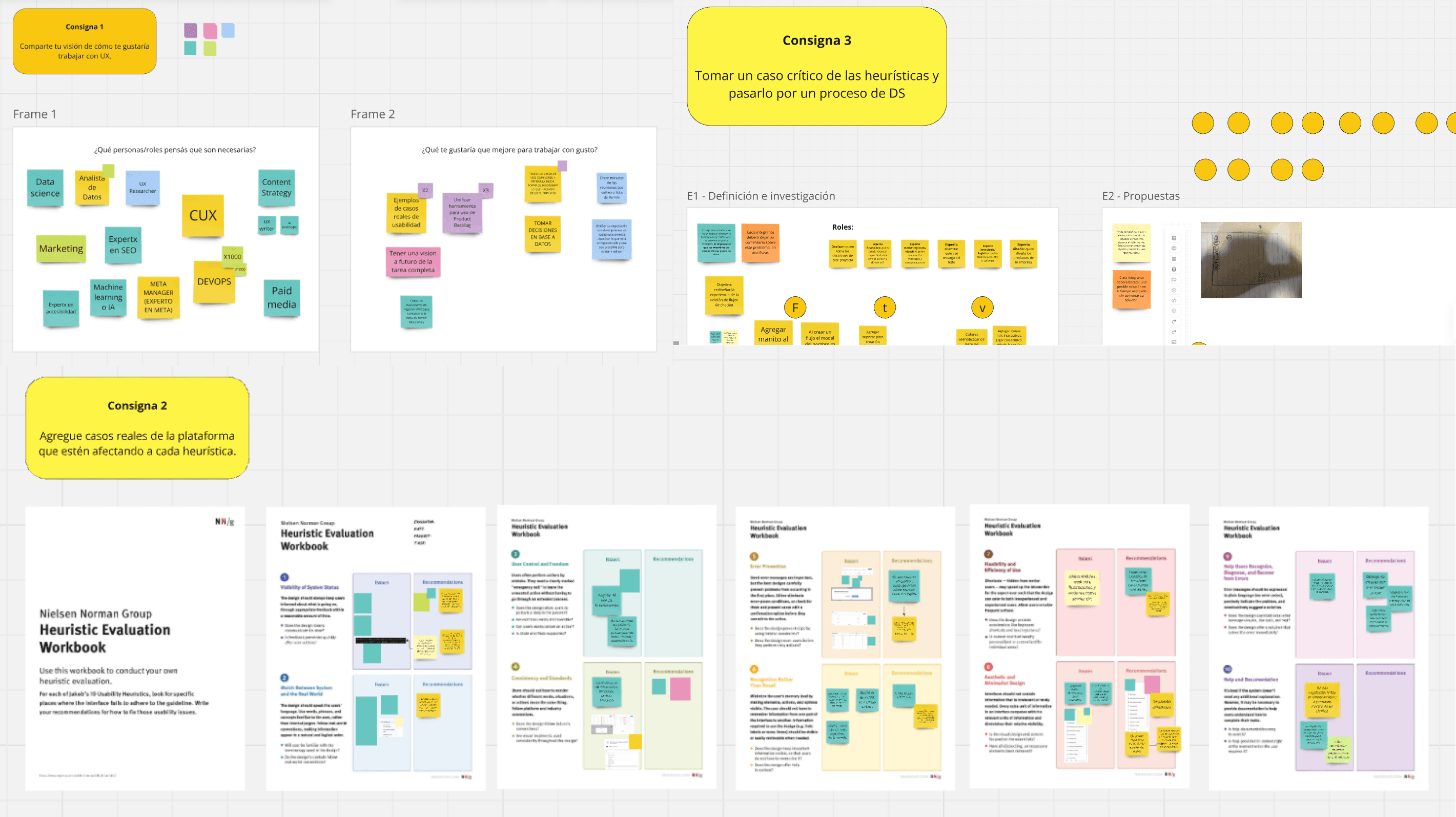
I ran a cross-functional UX training program for 10 people — 6 developers, 1 Scrum Masters, and operations staff. The sessions covered UX fundamentals, heuristic evaluation principles, and how to collaborate on design decisions as a team.
I ran a cross-functional UX training program for 10 people — 6 developers, 1 Scrum Masters, and operations staff. The sessions covered UX fundamentals, heuristic evaluation principles, and how to collaborate on design decisions as a team.
This wasn't optional context — it was the foundation. Without shared language between design, development, and business, any interface improvement would stall at implementation.
This wasn't optional context — it was the foundation. Without shared language between design, development, and business, any interface improvement would stall at implementation.
The output of the training wasn't just alignment. It produced a prioritized backlog of usability issues, identified directly by the team through hands-on heuristic exercises. That backlog became the roadmap for the first iteration cycle.
The output of the training wasn't just alignment. It produced a prioritized backlog of usability issues, identified directly by the team through hands-on heuristic exercises. That backlog became the roadmap for the first iteration cycle.
Infrastructure before iteration
Infrastructure before iteration
In the first three months, I built the foundational layer the product was missing:
→ Heuristic analysis across the full platform, documenting violations and prioritizing by user impact.
→ Handoff framework via Notion, aligning design and development on a shared source of truth for the first time.
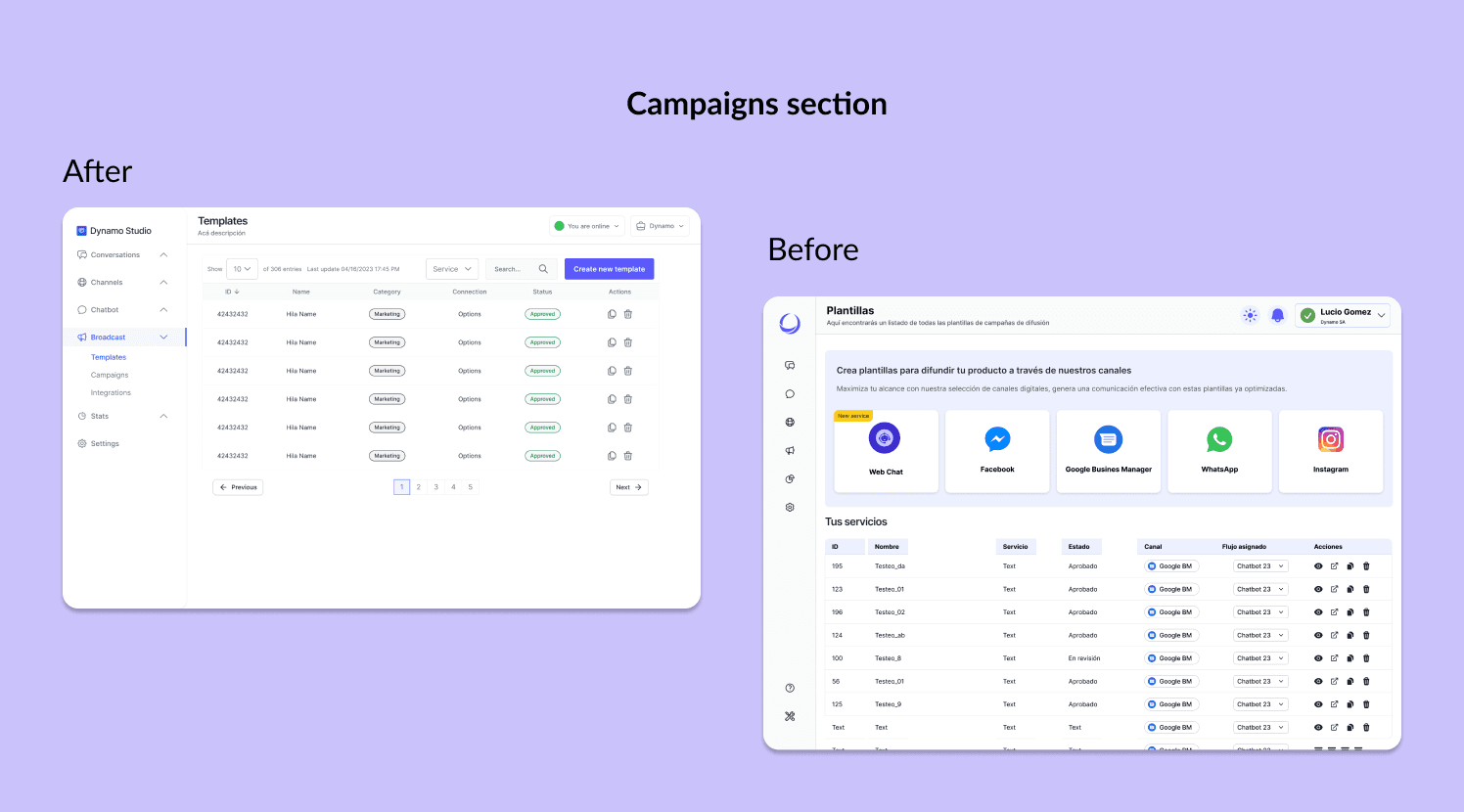
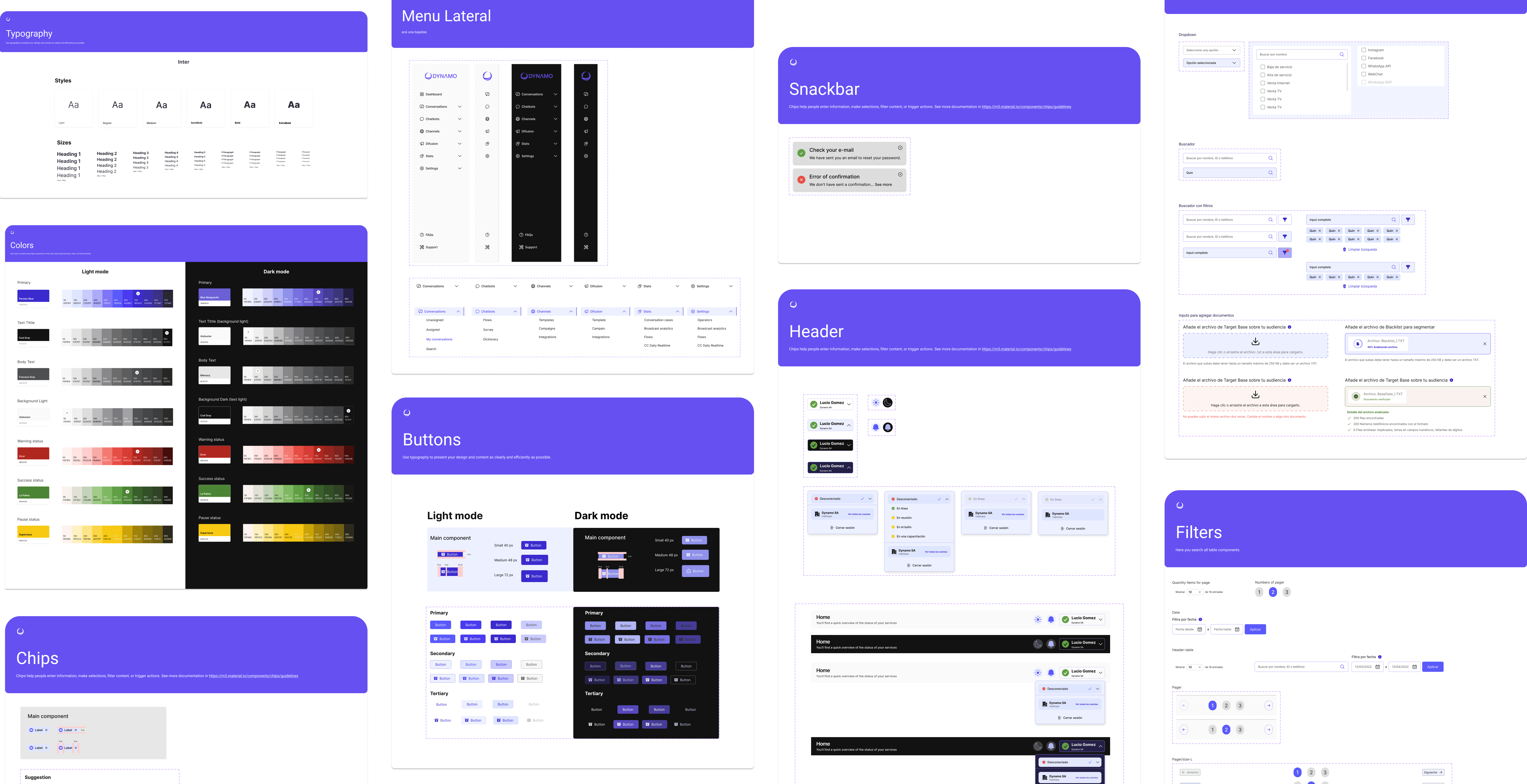
→ Design System implemented in 1 month, covering typography, color, components, dark/light modes — enabling the team to iterate 68 screens across 7 existing flows without rebuilding from scratch each time.
In the first three months, I built the foundational layer the product was missing:
→ Heuristic analysis across the full platform, documenting violations and prioritizing by user impact.
→ Handoff framework via Notion, aligning design and development on a shared source of truth for the first time.
→ Design System implemented in 1 month, covering typography, color, components, dark/light modes — enabling the team to iterate 68 screens across 7 existing flows without rebuilding from scratch each time.
The Design System wasn't a nice-to-have. It was the tool that made it possible to move fast without accumulating more visual debt on top of the existing technical debt.
The Design System wasn't a nice-to-have. It was the tool that made it possible to move fast without accumulating more visual debt on top of the existing technical debt.
Thus, in the first three months of my time at Dynamo Mobile, I developed a heuristic analysis, provided a handoff framework via Notion, as well as created the first Design System of the platform to begin the iteration task.
Iterating what mattered most
Iterating what mattered most
The first iteration cycle came directly from the heuristic backlog. Two issues stood out as the highest priority:
User role and permission management had been architected at the backend level with no consideration for how agents and supervisors actually navigate the platform.
The complexity was invisible in code but created constant friction in daily use.
The first iteration cycle came directly from the heuristic backlog. Two issues stood out as the highest priority:
User role and permission management had been architected at the backend level with no consideration for how agents and supervisors actually navigate the platform.
The complexity was invisible in code but created constant friction in daily use.
System status feedback was broken throughout — notifications for deletions, creations, and state changes weren't displaying correctly, leaving users with no confirmation that their actions had registered.
System status feedback was broken throughout — notifications for deletions, creations, and state changes weren't displaying correctly, leaving users with no confirmation that their actions had registered.
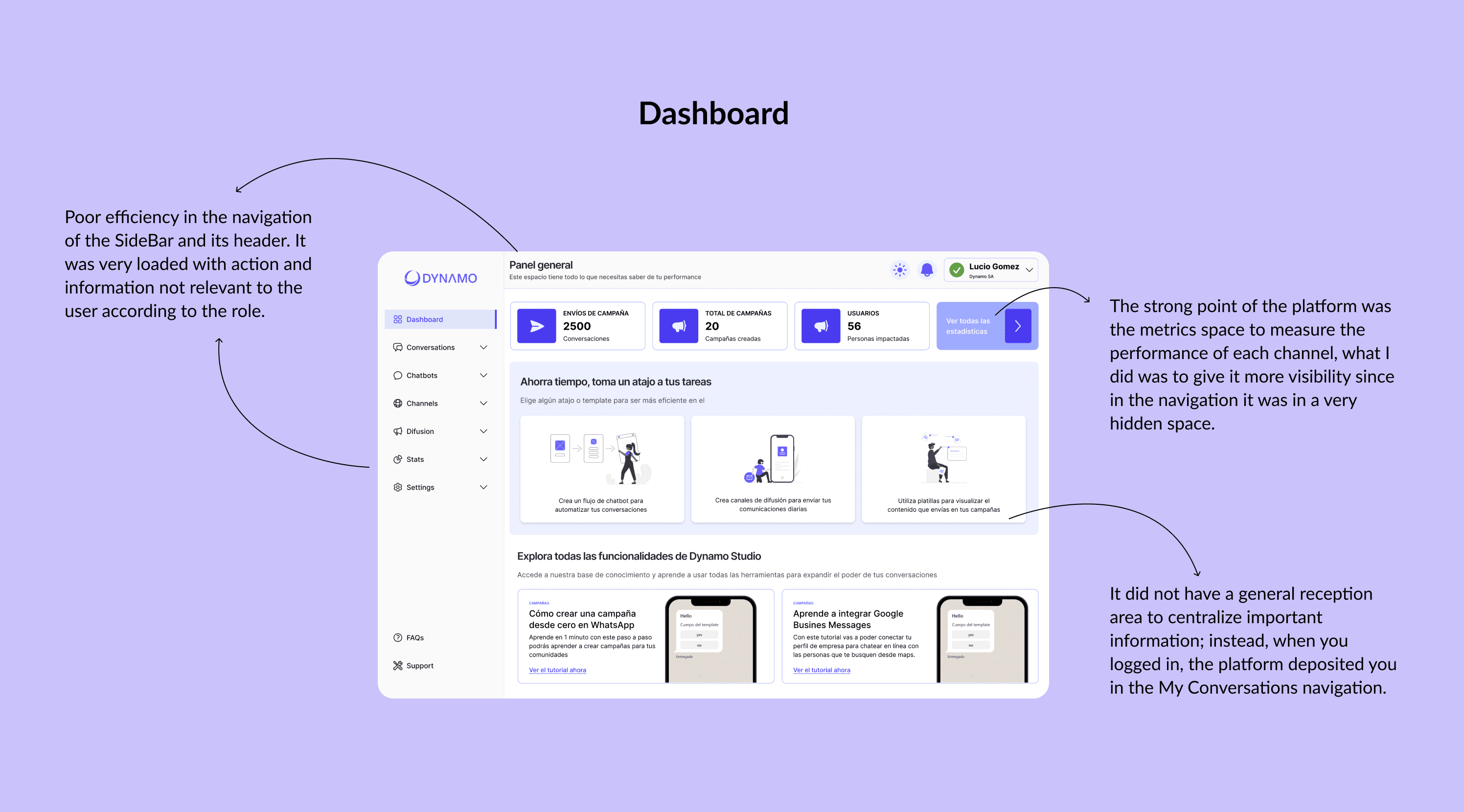
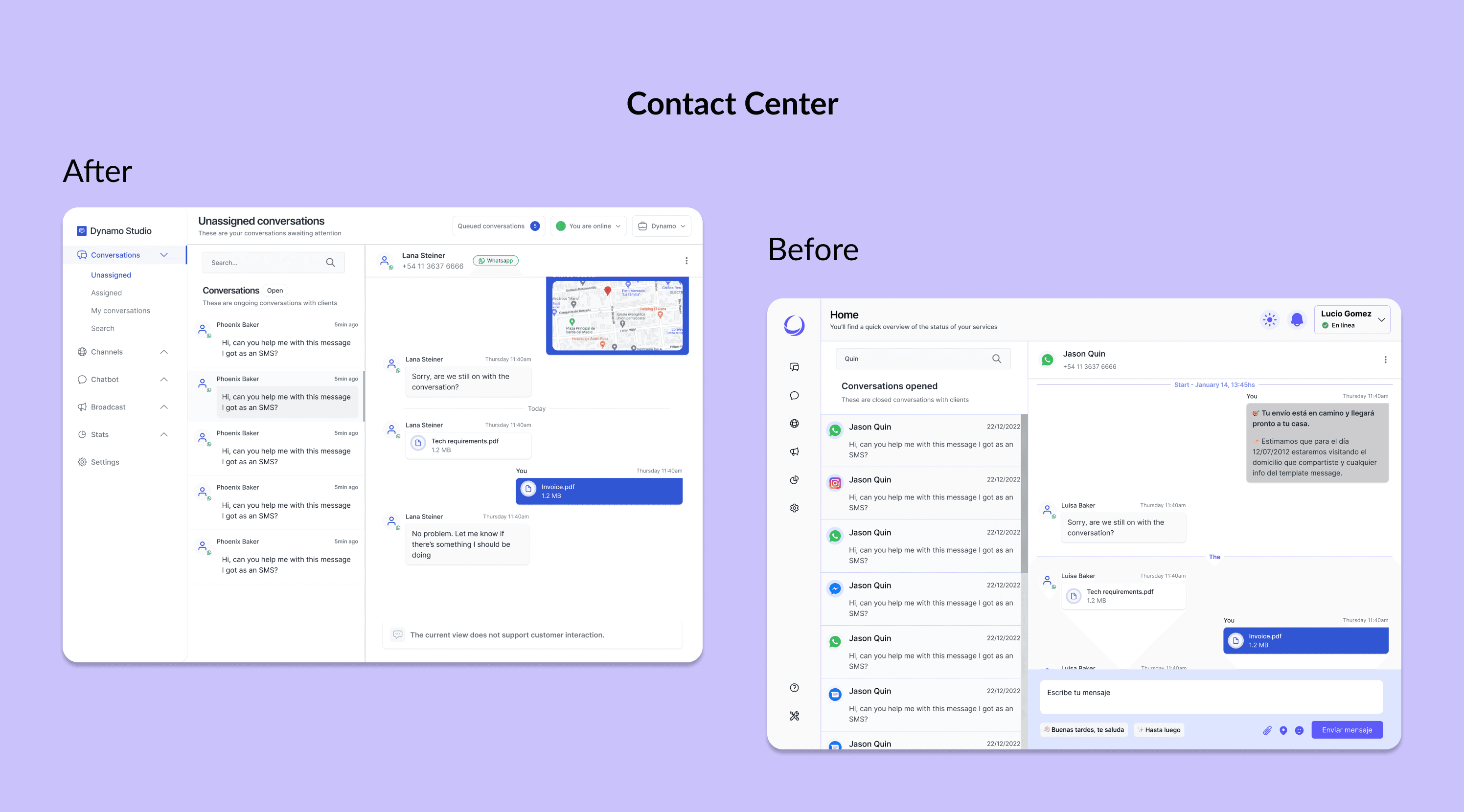
The first iterations that were worked on were the results of the heuristic analysis. For example, a major pain point of the platform was the management by user type and role. This involved a complexity that had not been thought of from experience, but at the backend technical level.
Both were fixed in the first sprint cycle, establishing a pattern: heuristic finding → hypothesis → iteration → validation.
Another point was the correct use of notifications to respect the heuristics of the system status, as they were not being displayed. So, we improved this usability rule, the actions of deleting, creating or changes made.
In parallel, sales and marketing — in collaboration with product — defined 4 ideal ICPs to focus the commercial offer. This reduced the scope of unvalidated features and gave the team a clear lens for prioritization: does this solve a real pain for one of these four customers?
By the end of the engagement: 68 screens iterated, 7 existing flows redesigned, 5 new flows created, and 3 new clients onboarded during the MVP phase.
The insight that changed the commercial offer
The insight that changed the commercial offer
In the final month, the team started cross-referencing sales demo feedback with early user behavior data from Microsoft Clarity.
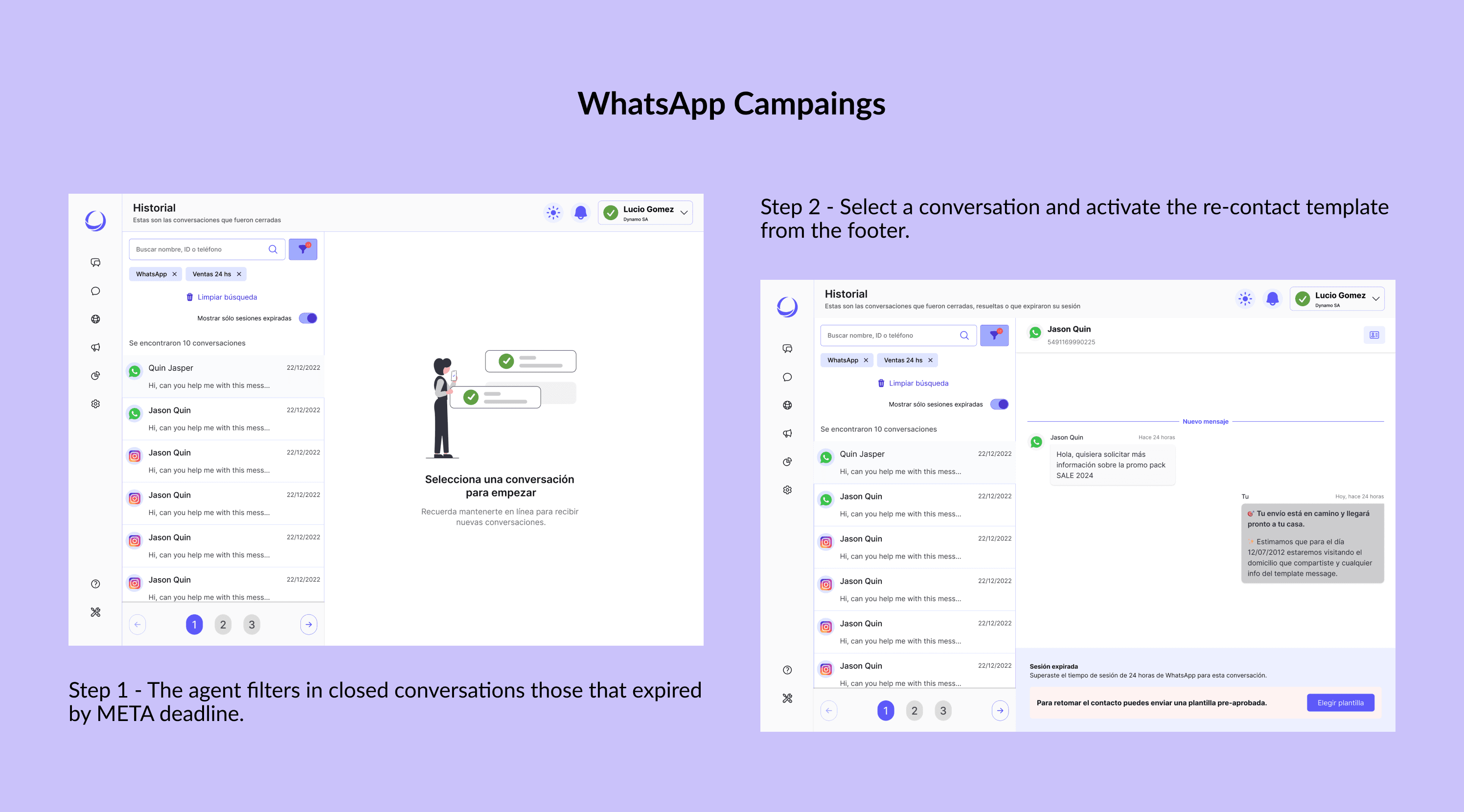
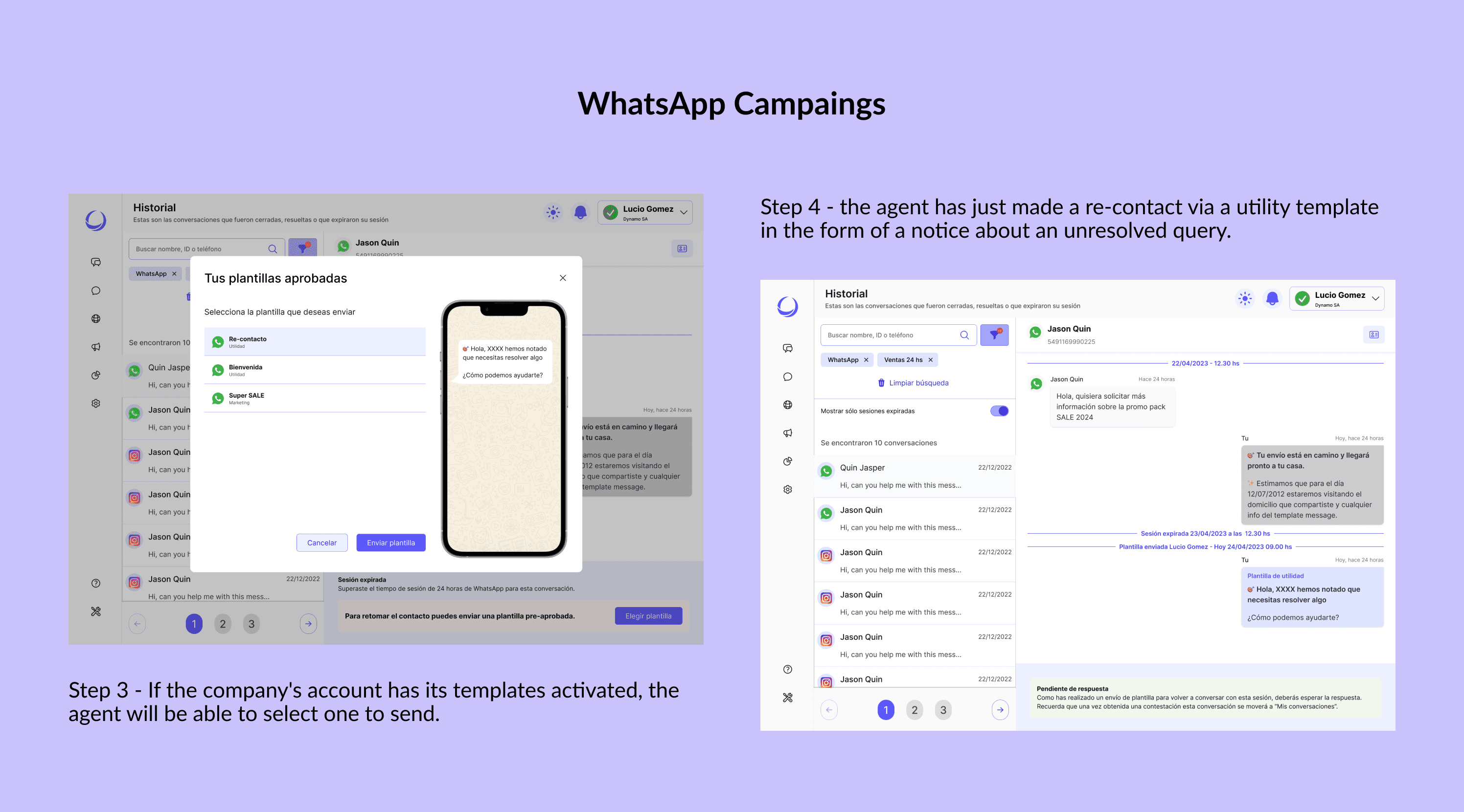
One pattern emerged consistently: clients wanted to re-engage WhatsApp conversations that had been closed by the META 24-hour session limit — but the platform had no solution for it, and the cost of traditional remarketing campaigns was proving prohibitively high.
In the final month, the team started cross-referencing sales demo feedback with early user behavior data from Microsoft Clarity.
One pattern emerged consistently: clients wanted to re-engage WhatsApp conversations that had been closed by the META 24-hour session limit — but the platform had no solution for it, and the cost of traditional remarketing campaigns was proving prohibitively high.
The most frequent comment prompted a new hypothesis to iterate the platform and it was about how we went about helping clients improve WhatsApp campaigns by re-engaging closed conversations. This is usually a remarketing campaign, but cost-wise it was proving to be very high.
This became the key differentiator opportunity.
The solution I designed was a permission-based reactivation button inside the Contact Center. Depending on the agent's role and the customer's status on the platform, the button triggers a pre-approved utility template that reopens the conversation — respecting META's transactional cost structure for Business API partners.
For this we conclude on two issues. First, the Contact Center has the particularity that conversations last 24 hours due to the integration with Meta.
This generated chat closures and prevented a new contact on that same customer who had not yet been served.
This wasn't a feature request. It came from listening to what sales was hearing in demos and connecting it to what users were actually doing in the product. That's the loop I was trying to build from the beginning.
Secondly, the competition already had a solution in place. This meant that Dynamo Studio had to find the differential by exploiting the WhatsApp channel, which took more than 90% of the conversational traffic for sales and customer service in the first instance of contact with customers.
What I'd do differently
What I'd do differently
3 new clients signed during the MVP phase.
I don't have post-launch usage data — my engagement ended before scale.
But the product went from stalled to commercially active in 3 months.
3 new clients signed during the MVP phase.
I don't have post-launch usage data — my engagement ended before scale.
But the product went from stalled to commercially active in 3 months.
3 new clients signed during the MVP phase. I don't have post-launch usage data — my engagement ended before scale. But the product went from stalled to commercially active in 3 months.
The most frequent comment prompted a new hypothesis to iterate the platform and it was about how we went about helping clients improve WhatsApp campaigns by re-engaging closed conversations. This is usually a remarketing campaign, but cost-wise it was proving to be very high.
Do you have a challenge for me?
Do you have a challenge for me?
Do you have a challenge for me?
Chatear hora
|
Enviar un mail
Follow me
© All rights reserved
Made with love by Gigi ❤️
Follow me
© All rights reserved
|
Made with love by Gigi ❤️